


Pasture Raised Pigs (taking 2026 reservations)
What is Pastured Pork?
Some pigs live in cages.
Some pigs live in barns.
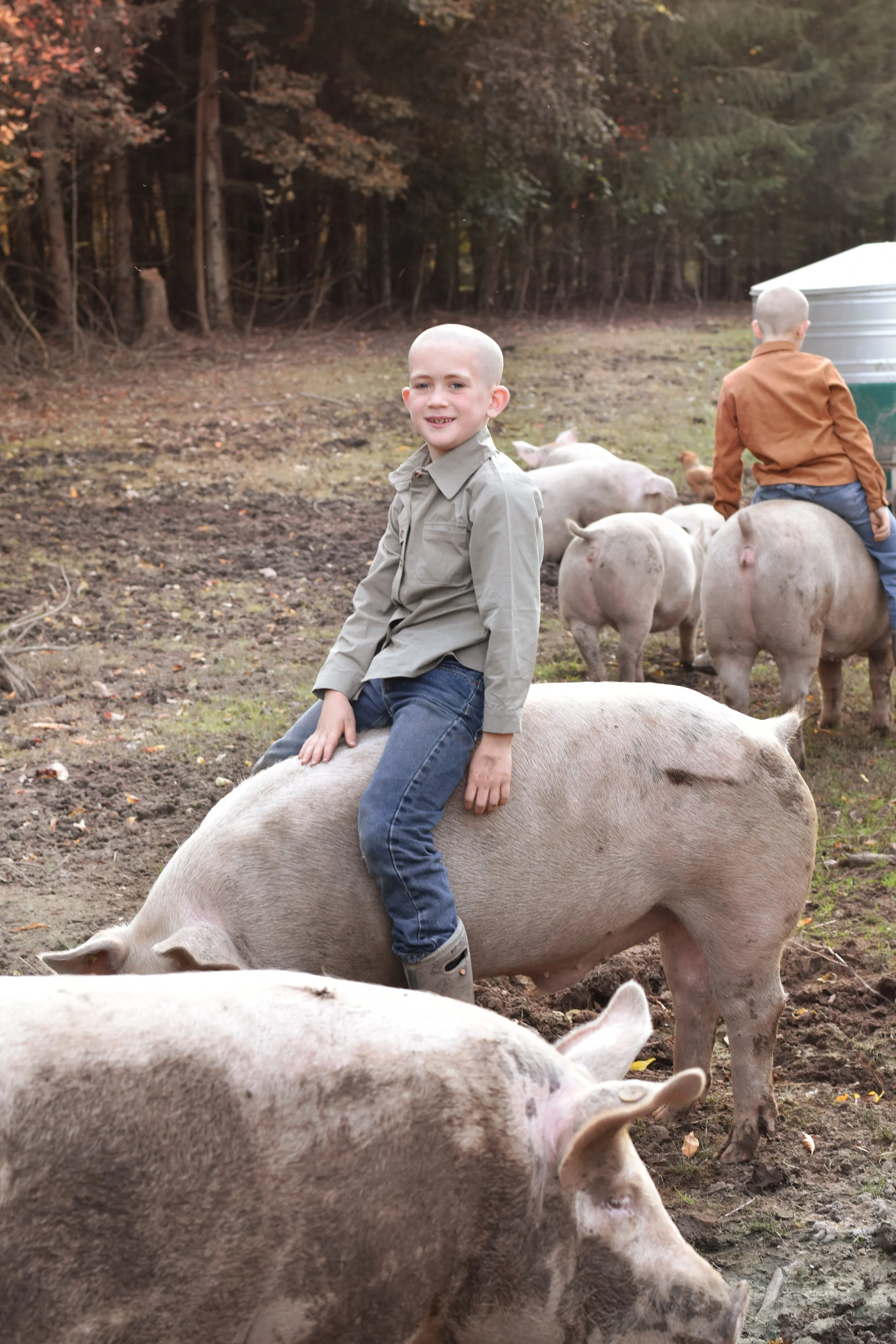
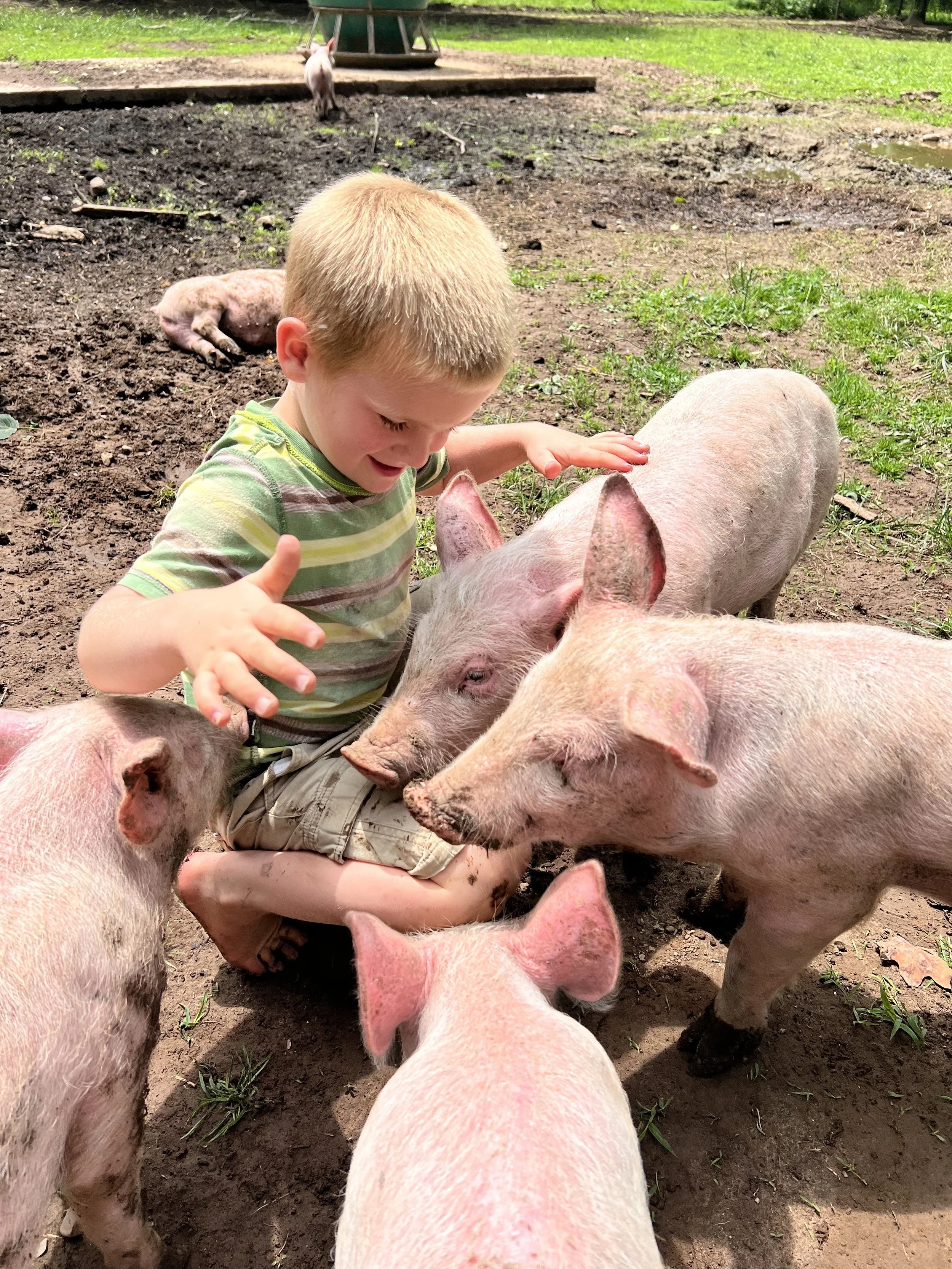
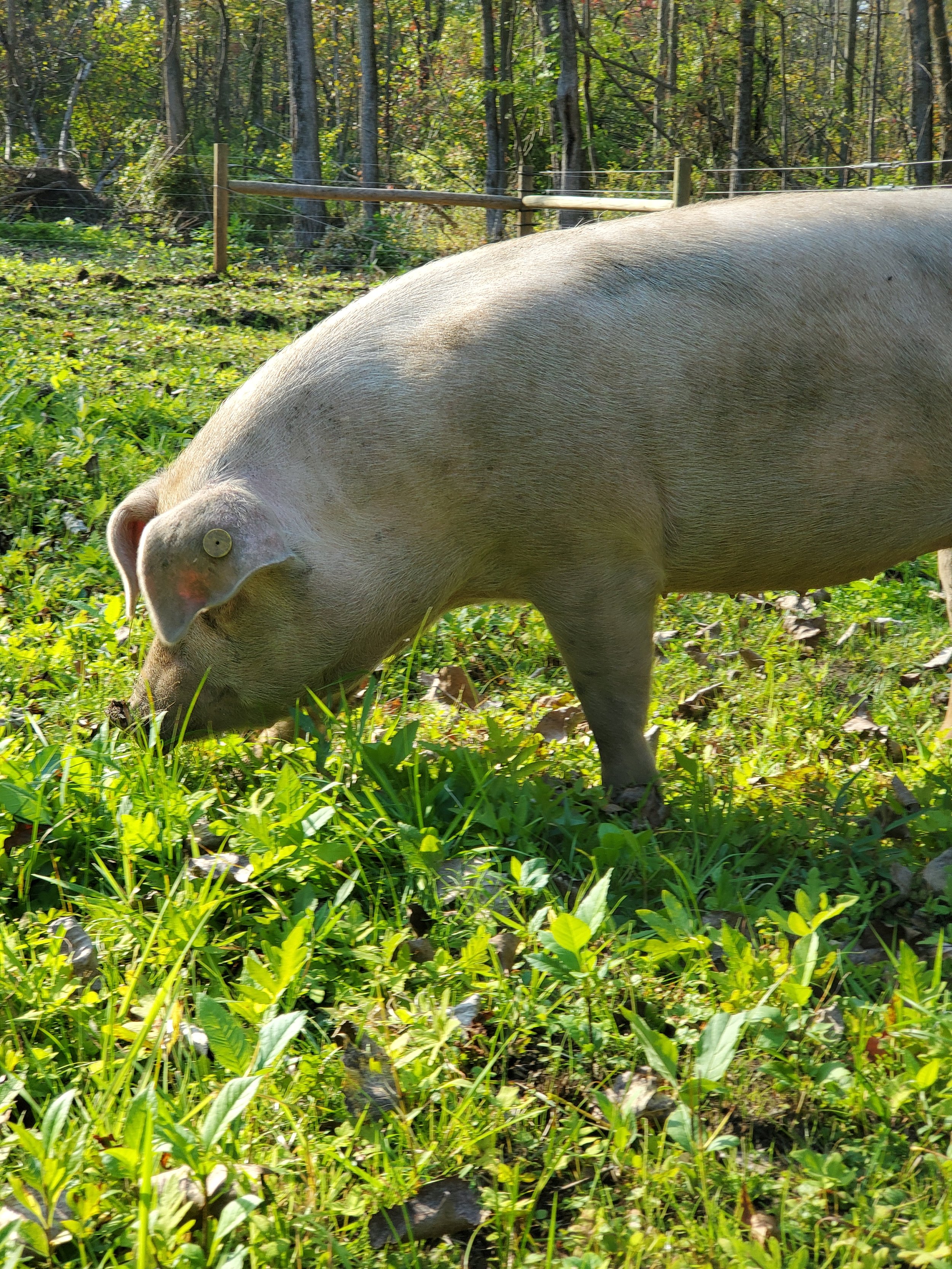
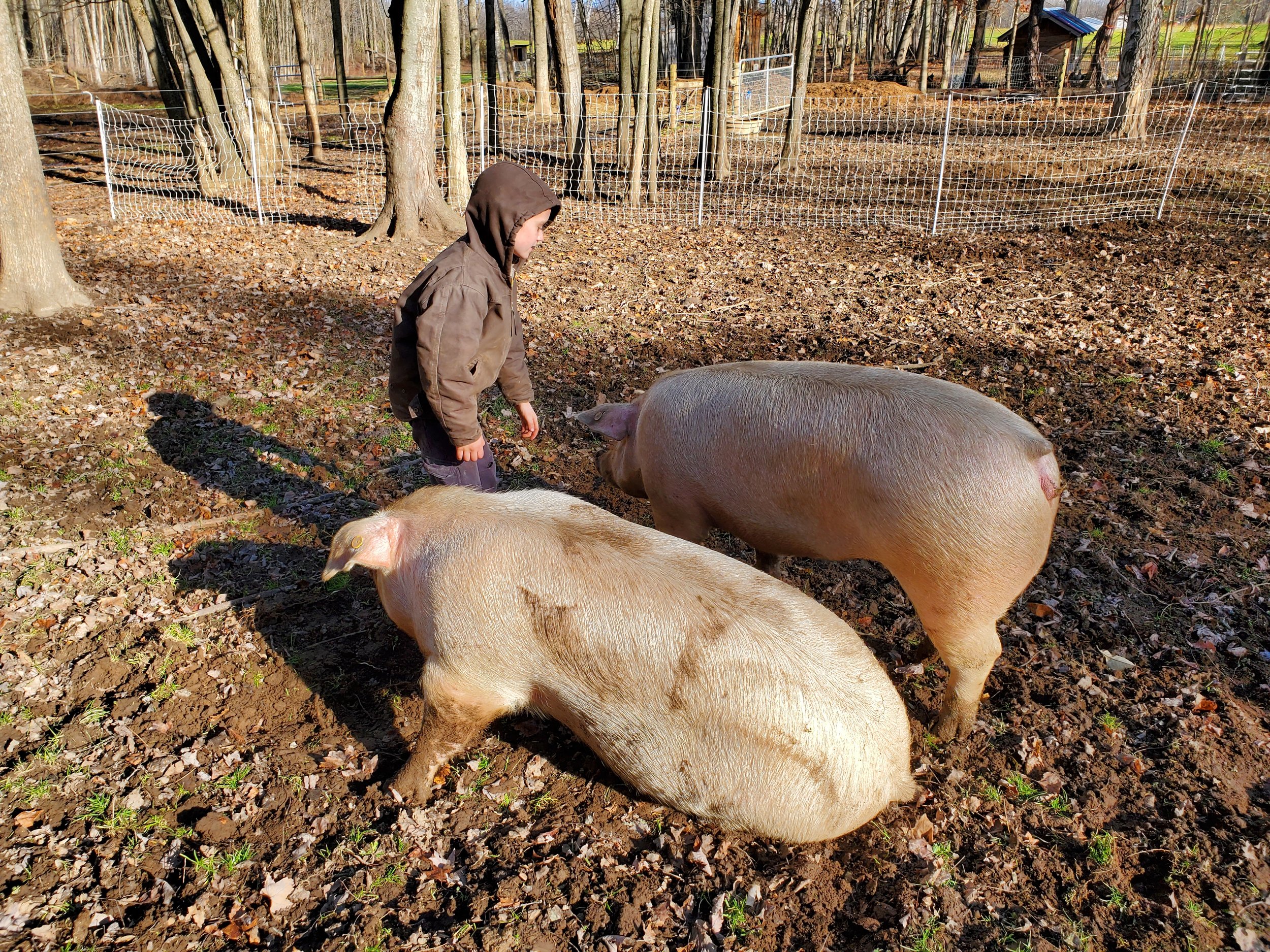
Our pigs live on pasture.
At Little Oxen Farm, our son Miles raises his pigs with love and intention. This is his business, and he takes great care in how his animals are raised from start to finish.
Our pigs spend their days foraging on pasture—rooting, grazing, and eating whatever they find appetizing—while also receiving a supplemented diet of non-GMO grain. With the sun on their backs and the wind on their faces, they are free to live as pigs were designed to live.
They are calm, well-cared-for, and truly happy pigs..





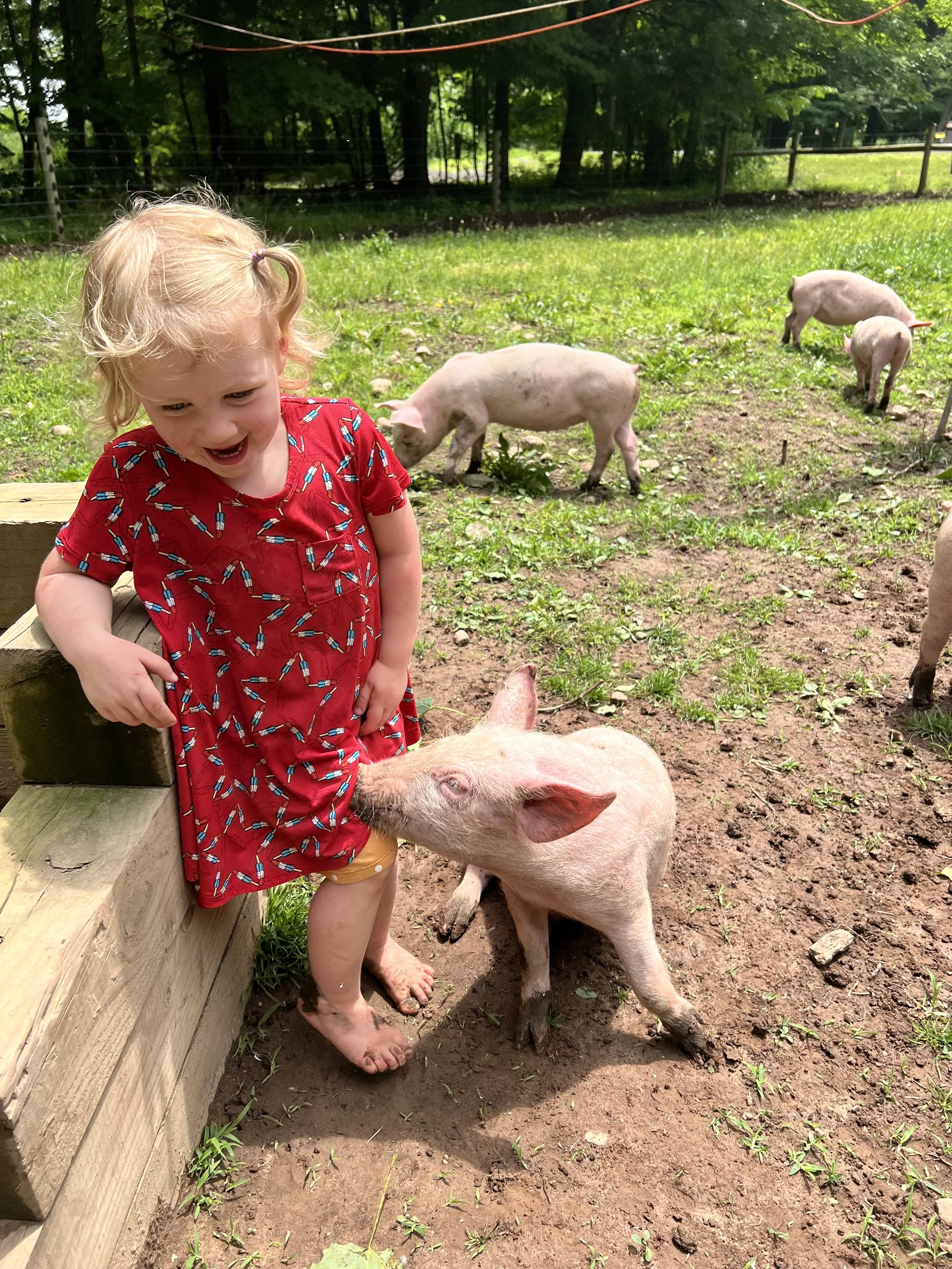
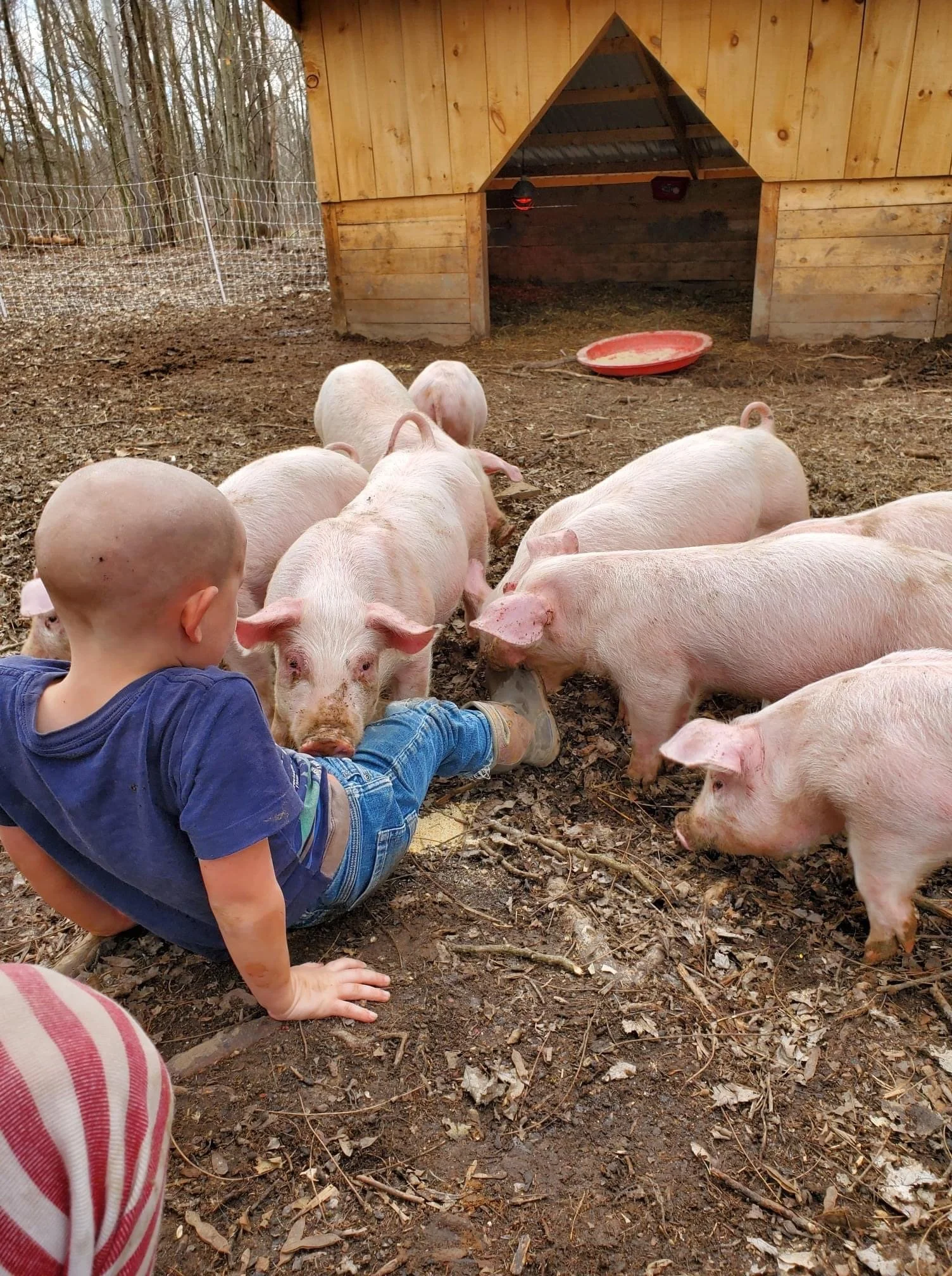
Our Pigs:
2026 pigs will be butchered in November 2026
Our pasture-raised pork comes from pigs raised right here on our farm by our son, Miles. They live outdoors on pasture and are fed a non-GMO grain diet, allowing them to grow the way pigs were meant to—rooting, grazing, and living low-stress, natural lives.
The result is pork with excellent flavor and a healthier fat profile. To support families who want to know exactly where their food comes from, Little Oxen Farm offers whole and half pigs for sale. It’s a simple way to fill your freezer with high-quality, locally raised pork you can feel confident feeding your family—while supporting responsible, small-scale farming.
Buying a Half or Whole Pig: Step-by-Step
Step 1: Reserve Your Pig (Early Spring)
To purchase a half pig or whole pig, we take reservations in early spring.
A $100 deposit is required to hold your spot. This deposit goes toward the final price of your pig.
Availability is limited, and reservations are filled on a first-come, first-served basis.
Step 2: How Our Pigs Are Raised
Our pigs are raised on pasture where they forage naturally, supplemented with non-GMO grain from Original Feeds and fresh vegetables from generous neighbors whose gardens produced more than they could use. This results in healthy animals and flavorful, nutrient-dense pork.
Step 3: Pig Size & Expected Yield
We finish our pigs at a live weight of approximately 250–300 lbs.
Typical breakdown:
Live weight: 250–300 lbs
Hanging weight: ~70% of live weight
Final meat in your freezer: ~70% of hanging weight
Estimated freezer take-home:
Whole pig: ~120–150 lbs
Half pig: ~60–75 lbs
Final yield depends on butcher cut selections (bone-in, boneless, sausage, curing, etc.).
Step 4: Pricing (Based on Hanging Weight)
Whole Pig: $4.25 per lb (hanging weight)
Half Pig: $4.50 per lb (hanging weight)
Deposit: $100 (applied to final total)
Final pig cost is calculated after hanging weight is confirmed at the butcher. ***a 10% discount will be applied for repeat customers!
Step 5: Processing & Butcher Details
When your pig is ready, we transport the pig to a trusted local butcher.
You’ll work directly with the butcher to:
Choose your cuts and packaging
Select sausage and curing options
Ask about processing timelines
Processing fees are paid directly to the butcher by the customer and typically range from $200–$400 for a whole pig, depending on your selections.
Step 6: Total Budget Expectations
As a general rule of thumb:
Whole pig: Budget around $1,500 total
Half pig: Approximately half that amount
Most families end up paying about $5–$7 per pound for finished, freezer-ready pork—covering a wide variety of premium cuts.
What You’re Getting
By purchasing a half or whole pig from Little Oxen Farm, you’re getting:
Pasture-raised pork fed non-GMO grain
Local, transparent, small-scale farming
Direct delivery to a local butcher
A freezer stocked with high-quality pork for months
Reserve your 2026 pig
Having Trouble on Pork Cuts?
Watch this video which does an excellent job detailing how a pig is broken down into the different cuts of pork.

A couple of interesting articles

How Pharma Hides Data About Farm Antibiotic Use
Nutrition in Pastured Pork
In pork, one big issue is fat quality. This comes pretty much directly from their diet. In the wild, pigs eat pretty much anything they can get their snouts into: roots, grass, leaves, grubs, nuts (most famously hazelnuts and acorns), berries and fruit, and insects. Under human care, they’ll also happily eat table scraps with no ill effect, provided those table scraps came from healthy food in the first place.
Contrast that with the typical diet for factory-farmed pigs, which is largely based on corn and soybean meal, together with all the disgusting additions mentioned above. This feed is very high in Omega-6 PUFA, and the more Omega-6 fats in the pig’s diet, the more will be in the meat.
(A brief review of what these numbers mean: for optimal health, you want to get a relatively low amount of overall PUFA, with a low ratio of Omega-6 (inflammatory) to Omega-3 (anti-inflammatory). The best ratio of O6:O3 is between 1:1 and 4:1. For more details, you can read about the whole issue here.)
Getting back to the pork, a 2012 review that tried to make an overall comparison between free-range and factory-farmed pork had a difficult time, because the studies found widely different results. Some found no significant difference at all; others found the free-range pork to be anywhere from 18% to 291% higher in Omega-3s, with a difference in O6:O3 ratio anywhere from 7% to 42%. Whenever there was a difference, it was a difference in favor of the free-range animals.
This variation in results is frustrating but not surprising. First of all, not all pigs are the same; it’s unreasonable to expect totally uniform results. The type of plants on the pasture can also have an effect. Then you have to consider that all these studies raised the pigs in different ways. It would really be more surprising if the research all agreed!
Even with the different results, though, it’s clear that the pastured pigs are coming out on top. The reasons for this aren’t hard to figure out:
Truly pastured pigs get more Omega-3s. Green grass and leaves are major sources of Omega-3 fats in animal diets – these are foods available to truly pastured pigs, but not to “free-range” pigs that actually live in a barn. And there’s a lot of evidence that feeding acorns increases the Omega-3 content and MUFA content of the meat. In other words, pigs eating their natural diet get a lot more Omega-3s than pigs in a factory farm.
The effect of dietary Omega-3s is very significant. One group of researchers studied two groups of pigs. One group of pigs ate a diet supplemented with 5% linseed oil (very high in Omega-3 fat); the other group was the control. At the end of the study, ham made from the Omega-3 group had an O6:O3 ratio of 2.5:1 (healthy), while ham made from the control group had a ratio of 12:1 (less healthy).
Looking at these two facts, it seems reasonable that the truly pastured pigs (as opposed to “free-range” pigs that really aren’t) would be on the high end of the benefit spectrum. All pigs have a fairly high O6:O3 ratio, but the pastured pigs are the clear winners compared to their factory-farmed cousins.
The results for micronutrient content are less impressive. For Vitamin E, the 2012 review found that free-range pork provides 1.7-5% of the RDA, compared to 0.8-2.5% for CAFO pork. For iron, the difference was even smaller: 3.6% for free-range vs. 1.1% for CAFO. This could potentially make a difference if pork is your only source of Vitamin E or iron, but it’s not extremely significant in the context of an otherwise balanced diet.
The upshot: pastured pork doesn’t necessarily have more micronutrients, but its fat quality is likely to be significantly better, as long as it was truly raised on a pasture and allowed to eat a natural diet including green plants and acorns.